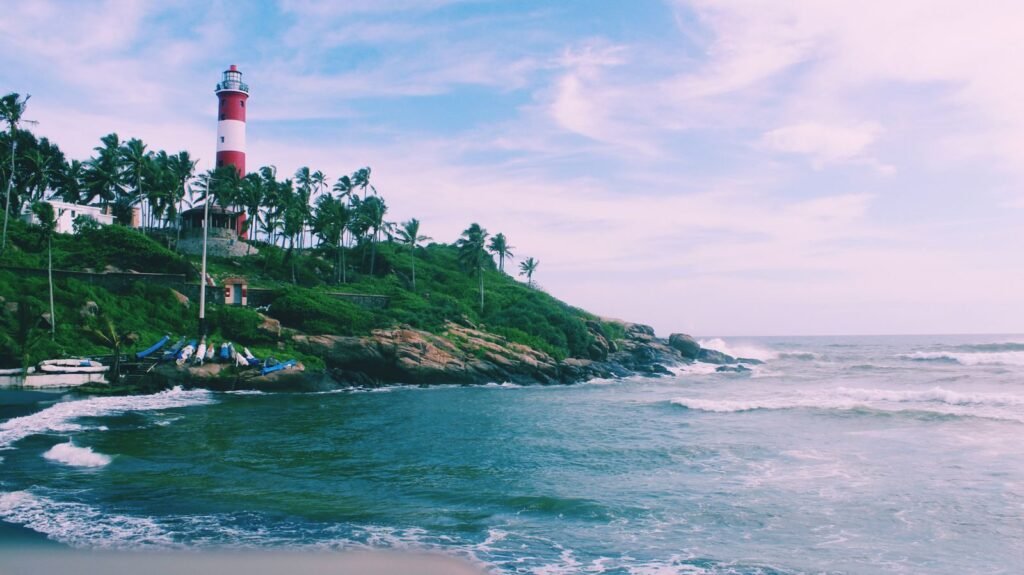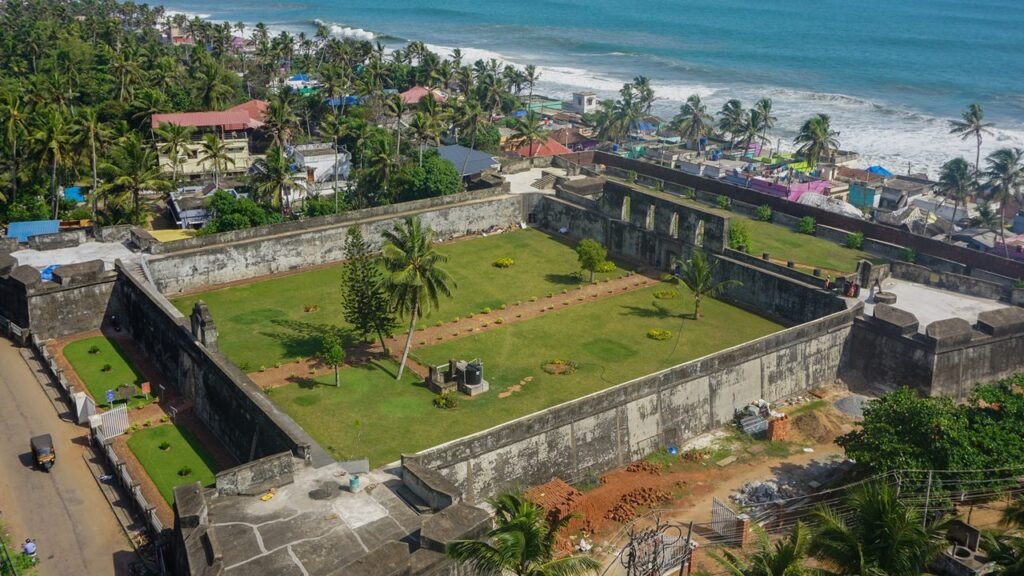
Anjengo Fort, locally known as Anchuthengu, is a compact but evocative ruin on the Kerala coast that preserves traces of European maritime history, colonial trade networks and local interactions between the East India Company and the rulers of Travancore. Situated along the Arabian Sea close to the popular coastal town of Varkala, the fort draws visitors who combine beach tourism with a curiosity for historic sites. This article traces the fort’s history, describes what remains today and offers practical advice for tourists.
Anjengo emerged as an important English East India Company outpost in the late 17th century. The Company established a fortified factory here to secure access to Malabar spices (especially pepper), to provide a safe anchorage for trading ships and to assert influence on the southern Kerala coast in competition with other European powers.
Over the next century the site functioned as a commercial stronghold, a local administrative centre and a military garrison. It witnessed periodic tensions and skirmishes tied to the shifting balance of power among local rulers, European trading companies and maritime challengers. Over time, as trade patterns and political conditions changed, the fort’s strategic importance declined and much of the structure fell into disuse, leaving the fragmentary remains visible today.
Although only ruins survive, they are sufficient to convey the fort’s original purpose and layout:
The cemetery at Anjengo is a focal point for visitors. Weathered inscriptions and carved motifs on the tombstones provide human-scale connections to the fort’s story: names, dates and epitaphs that remind us of the hardships of sea voyages and colonial life. For many tourists this quiet spot, set against the coastal landscape, is the most evocative part of a visit.
Anjengo is important not because it was a great fortress but because it illustrates the early operational model of the East India Company on the Malabar coast — fortified trading posts that combined commerce, diplomacy and limited military capability. The site highlights:
Today the fort is a low-key heritage attraction that appeals particularly to visitors who are already in the Varkala area and want to add historical depth to a beach-oriented itinerary. Unlike large, fully restored monuments, Anjengo offers an intimate, contemplative experience among ruins and shoreline vistas.
As a fragile historic site, Anjengo benefits when visitors follow simple conservation-minded practices:
The exposed coastal location, salt spray, monsoon rains and vegetation growth all conspire to accelerate the deterioration of the remains. Conservation efforts have been intermittent and the site would benefit from sustained documentation, conservation work and interpretive signage. Responsible tourism that increases awareness and local stewardship can help safeguard the fort for future generations.
Visitors staying in Varkala can easily include Anjengo as a half-day or full-day excursion. A suggested itinerary:
Anjengo Fort is not a grand, fully restored monument but a small coastal ruin that rewards visitors who appreciate layered histories and quiet landscapes. It provides a tangible link to the early European presence on the Malabar coast, to the spice trade that shaped global connections, and to the local stories that intersected with imperial commerce. For the historically minded traveller in Varkala, a visit to Anjengo offers reflection, discovery and a striking seaside atmosphere.
What makes us different from other tour package companies
Our travel experts have core and intense knowledge about Kerala sector with over 10 years of experience that will help you choose the best possible itinerary as per your requirements.
Our travel experts are just one call away during your tour to help you with any kind of immediate assistance so that your tour is a more enjoyable and hassle-free tour.
eTourismKerala ensures best rates to all our esteemed guests since we have our own hotels and fleet of vehicles and drivers and there is no third-party involvement. This ensures personalized service and best rates.



















Kindly enter the details below for your Kerala Tour Package