Nestled in the Mattancherry quarter of Kochi (formerly Cochin), Kerala, Jew Town is a compact, atmospheric precinct where layers of maritime trade, colonial rule and Jewish life are visible in narrow lanes, antique shops and a small but remarkable synagogue. For visitors it is both a living piece of intercultural history and a popular stop on any heritage trail of Fort Kochi and Mattancherry.
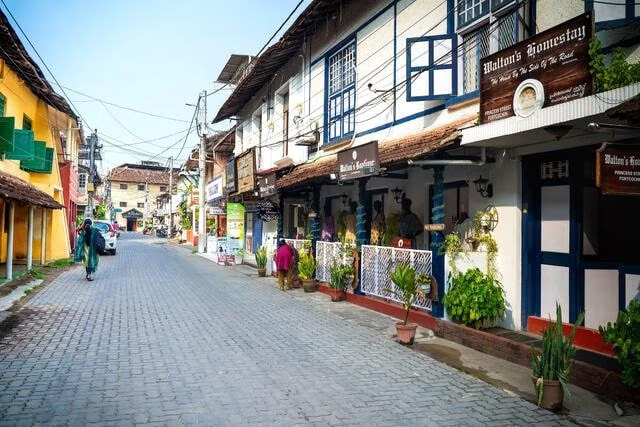
Jew Town occupies a stretch of lane close to the Mattancherry Palace (often called the Dutch Palace) and the bustling Mattancherry market. The area’s low, tiled-roof buildings, spice-scented air and rows of shops selling antiques and curiosities give it a timeless quality that evokes the centuries of trade for which Kochi was famed.
The story of Jews in Cochin has two strands: the older, locally rooted community commonly called the Malabar Jews, and a later group known as the Paradesi Jews (literally “foreigners”). Both contributed to the social and commercial fabric of the port city.
Local traditions hold that Jewish presence on the Malabar Coast dates back many centuries — possibly to the early centuries of the Common Era. While precise archaeological evidence for a continuous presence from antiquity is limited, historical sources and long-standing oral memory indicate that Jewish families were integrated into the coastal trading networks that dealt in spices, textiles and other goods. Jews acted as merchants and intermediaries between local and foreign traders, connecting Kochi with markets across the Indian Ocean.
The visible form of Jew Town today is largely shaped by events of the 16th and 17th centuries. Sephardic Jews and other refugees arriving after expulsions in Iberia and the upheavals in the Middle East in the late 15th and early 16th centuries—some of whom traveled through Ottoman or Middle Eastern ports—arrived in Kochi and established their own houses and institutions. Under the relatively tolerant rule of the local rajas and later under the Dutch (who took control from the Portuguese in the mid-17th century), the Paradesi community prospered and built the now-famous synagogue in 1568. The synagogue and adjoining structures became the nucleus of what is today called Jew Town.
The Paradesi Synagogue in Mattancherry (often called the Mattancherry Synagogue) was built in 1568 and is one of the oldest synagogues in the Commonwealth. It stands as the best-known monument of Jewish Kochi and contains a number of notable features that attract scholars and tourists alike:
Note: The synagogue continues to function as both a place of worship and a heritage site; however, the Jewish population in Kochi is now very small, so public access may be subject to restricted hours and protocols to protect the space and its artifacts.
Close to Jew Town is an old Jewish cemetery containing tombstones with Hebrew inscriptions and epitaphs that offer powerful testimony to centuries of community life. Many stones are weathered but still readable, and they document family names, dates and, in a few cases, origins. Scattered through the area are houses, wells and street names that recall the once larger Jewish presence.
In the 20th century, particularly after the creation of the State of Israel in 1948, most of Kochi’s Jews emigrated to Israel and to western countries. By the latter half of the 20th century the local Jewish population had dwindled to a handful of families. The synagogue, cemetery and a few remaining family homes remained as cultural and historical anchors, maintained by trusts, descendants and local authorities. Today, Jew Town’s identity as a Jewish quarter is as much a matter of preserved memory and material culture as of living communal practice.
Visitors come to Jew Town for three main reasons:
Preserving Jew Town’s built heritage and artifacts has required cooperation among local authorities, heritage organizations, international donors and the small community of descendants. Conservation work addresses old buildings, synagogue interiors and the cemetery. At the same time, rising tourist numbers, unregulated souvenir trade and commercialization can present challenges to authenticity and preservation. Balancing visitor access with conservation remains a key concern for heritage managers.
Although the resident Jewish population in Kochi is now small, the cultural footprint of the community is significant. Stories, place names, artifacts and festivals remembered by older residents keep the memory alive. On special occasions — for example, Hanukkah or community commemorations — the synagogue may see a greater degree of ritual life as visitors and returning descendants gather.
Jew Town in Cochin is a compact, evocative place where maritime history, Jewish heritage and Kerala’s trading culture intersect. For tourists it offers a concentrated experience of buildings, objects and stories that map centuries of contact between South Asia and Jewish diasporic communities. Visiting Jew Town responsibly — with an eye to conservation, respectful behavior and engagement with local guides — allows travelers to appreciate a rare and fragile chapter of India’s plural past.
What makes us different from other tour package companies
Our travel experts have core and intense knowledge about Kerala sector with over 10 years of experience that will help you choose the best possible itinerary as per your requirements.
Our travel experts are just one call away during your tour to help you with any kind of immediate assistance so that your tour is a more enjoyable and hassle-free tour.
eTourismKerala ensures best rates to all our esteemed guests since we have our own hotels and fleet of vehicles and drivers and there is no third-party involvement. This ensures personalized service and best rates.












Kindly enter the details below for your Kerala Tour Package