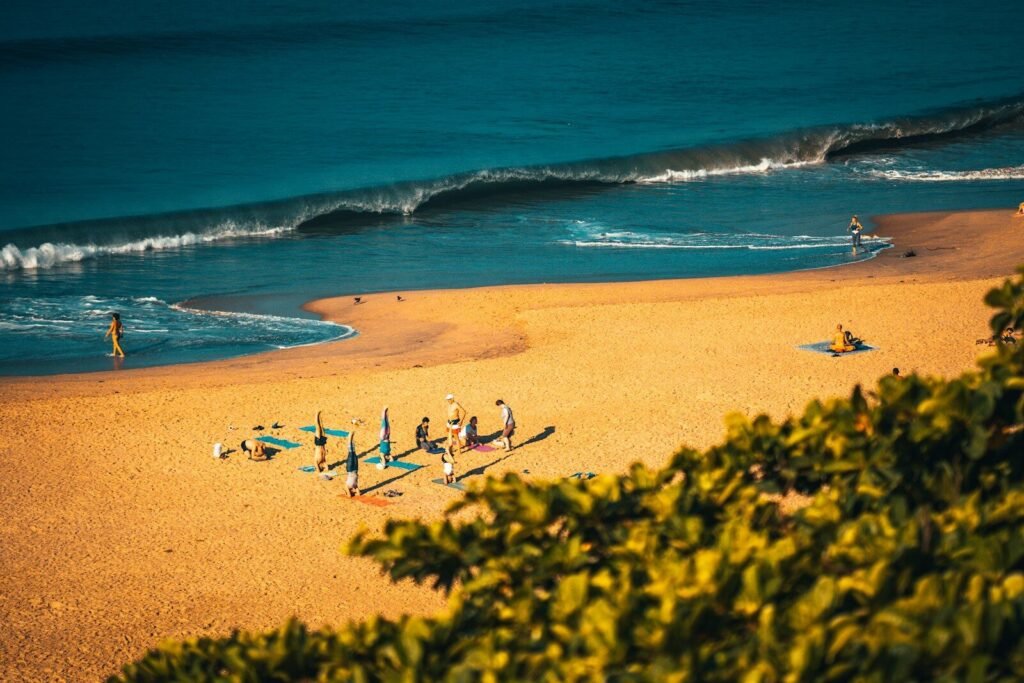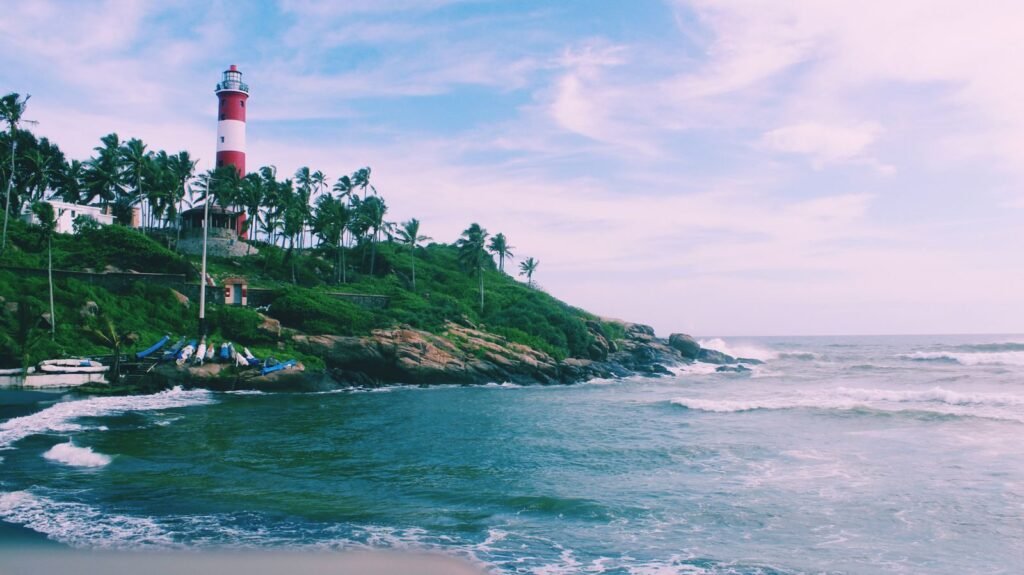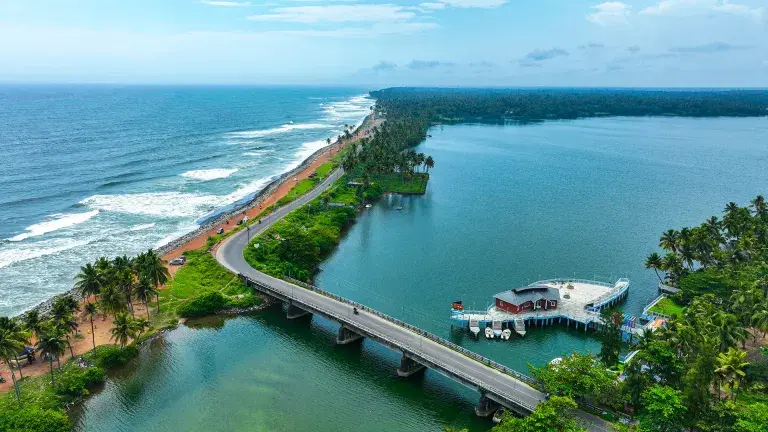
Kappil Beach, set where a shallow estuary and a narrow backwater (Kappil Lake) meet the Arabian Sea, is a quietly picturesque stretch of coastline in the Varkala area of Kerala. Framed by coconut groves, marshy lagoons and patches of mangrove, Kappil has become a distinctive complement to the better-known cliffs and temples of Varkala. This article traces its historical roots, the emergence of tourism, and the modern challenges and opportunities faced by the place from a visitor and conservation perspective.
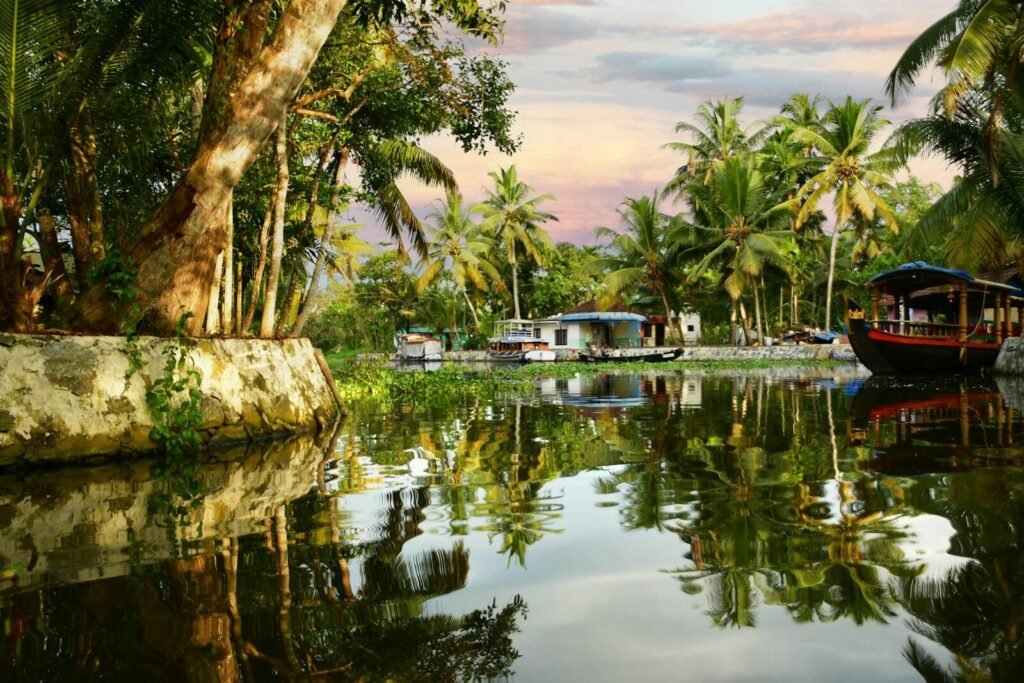
Kappil lies in the coastal strip of Thiruvananthapuram district, a short distance from Varkala town — roughly a few kilometres north of Varkala’s main tourist strip. The most striking physical feature is the meeting of the fresh-water Kappil backwaters with the Arabian Sea, creating a narrow estuary, sheltered reed beds and mangrove patches. This interface of land and sea gives the area a mixed ecology — beach, lagoon, marsh and small islands — which has both shaped local livelihoods and attracted visitors.
The coastal region that includes Kappil has been part of Kerala’s long maritime history. While Kappil itself remained a small fishing and littoral community rather than a major port, it lay within the cultural and commercial orbit of the ancient Chera polity and, later, the Travancore kingdom. The entire Varkala–Kappil coast benefitted indirectly from Kerala’s long-distance maritime trade in spices, coconut products and coir, which shaped settlement patterns and coastal economy over centuries.
During the colonial era the emphasis in the region remained on agriculture and fishing. European trade patterns reorganized some coastal commerce, but Kappil’s sheltered backwaters and sandbar geometry kept it relatively marginal compared with larger ports. Traditional livelihoods — fishing, canoe transport, coir-making and small-scale salt production — continued to shape local life into the 20th century.
After Indian independence and the reorganization of the state, gradual improvements in road and rail connectivity (notably the growth of Varkala as a rail junction) opened up the coast to larger numbers of visitors. In the late 20th century, Varkala’s reputation as both a pilgrimage centre (Janardana Swamy Temple and Papanasam) and a scenic cliff-and-beach destination began to spill over to neighboring coastal spots such as Kappil. Kappil remained more low-key — accessible but less commercialised — which later became its tourism asset.
For decades Kappil was primarily a local bathing spot and a livelihood base for fishing families. Visiting fishermen, seasonal holiday-makers and nearby villagers used the beach and backwaters, but the area was not a tourism hotspot. The relative seclusion and unspoilt character attracted visitors seeking quieter scenery than the busy Varkala cliff.
As Varkala rose in popularity among domestic and international travellers from the 1990s onward, Kappil became an attractive side-visit. Small homestays, boutique eco-resorts and local boat operators began to cater to visitors seeking backwater boating, birdwatching and quiet beach time. The mix of archaeological, religious and coastal-mountain leisure experiences in the Varkala region encouraged diversified visitor itineraries that included Kappil.
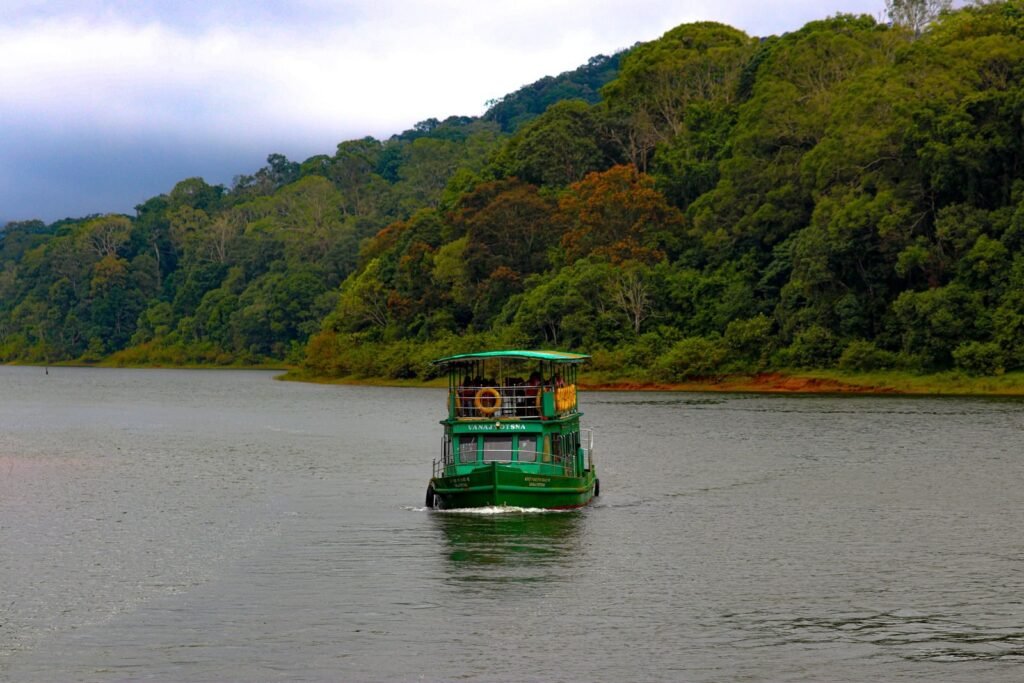
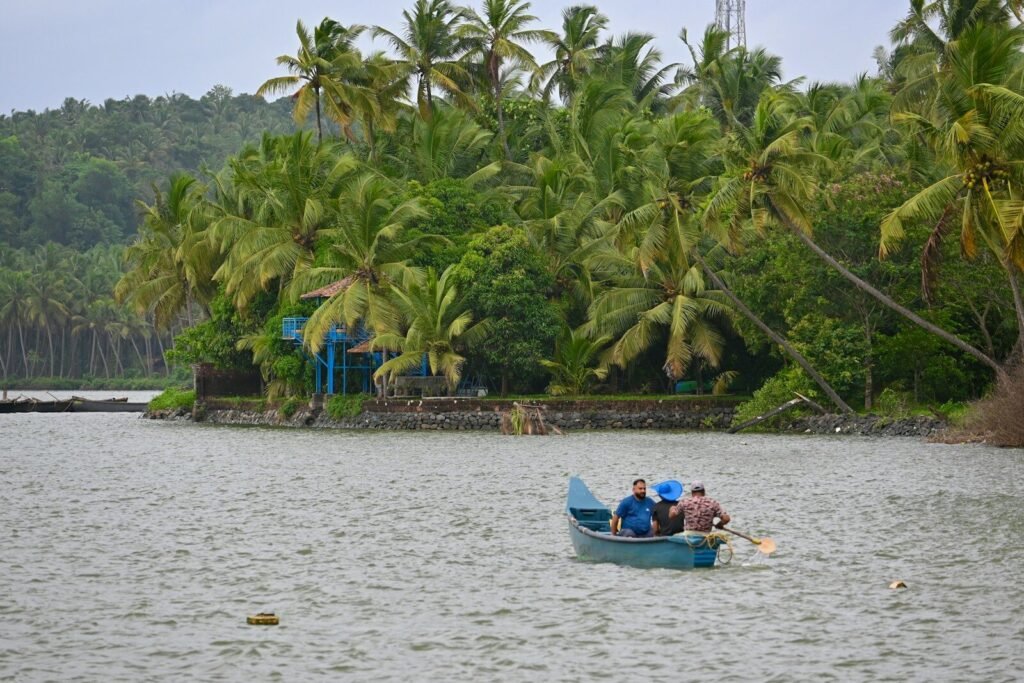
In the last decade Kappil’s tourism narrative has emphasized low-impact, nature-oriented experiences: backwater boat trips, birdwatching, mangrove walks and community-led homestays that highlight local cuisine and fishing culture. Local authorities and NGOs have increasingly discussed carrying capacity, waste management and protection of the lagoon-mangrove system as tourism grew.
Kappil shares cultural ties with the larger Varkala hinterland: temples and shrines, seasonal festivals and a coastal cuisine centered on fresh-caught fish, coconut and rice. Pilgrimage to Varkala’s Janardana Swamy Temple and ritual bathing at Papanasam beach brings many visitors to the area, some of whom extend their itineraries to Kappil for relaxation. Local festivals, temple processions and community rituals continue to shape the social calendar and provide cultural experiences for interested visitors.
Local panchayats, state agencies and grassroots organisations have taken steps to address threats through mangrove restoration, community awareness campaigns, restrictions on sand mining, guidelines for boat operators and promotion of responsible homestay practices. Tourism businesses increasingly market low-impact activities (guided nature walks, traditional canoe experiences) and support local livelihoods — an approach that balances visitor experience with environmental stewardship.
Kappil Beach represents a microcosm of Kerala’s coastal interaction between nature, culture and tourism. Its charm lies in the quiet confluence of lagoon and sea, village life and bird-rich wetlands. Historically a modest fishing and agricultural area within the long-lived cultural landscapes of south Kerala, Kappil has evolved into a sought-after low-key destination for travellers seeking nature, calm and authenticity near Varkala. The future of Kappil as a tourism destination depends on careful, community-centred management that preserves its ecological character while providing meaningful benefits to local people.
What makes us different from other tour package companies
Our travel experts have core and intense knowledge about Kerala sector with over 10 years of experience that will help you choose the best possible itinerary as per your requirements.
Our travel experts are just one call away during your tour to help you with any kind of immediate assistance so that your tour is a more enjoyable and hassle-free tour.
eTourismKerala ensures best rates to all our esteemed guests since we have our own hotels and fleet of vehicles and drivers and there is no third-party involvement. This ensures personalized service and best rates.

















Kindly enter the details below for your Kerala Tour Package