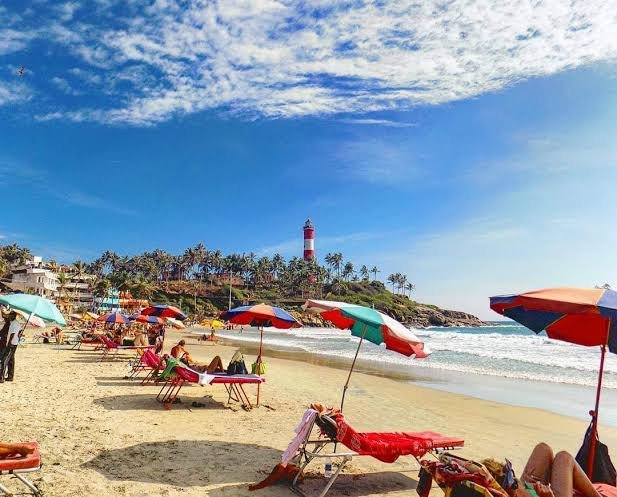
Kovalam Beach, located on the Arabian Sea coast near Thiruvananthapuram (Trivandrum) in Kerala, India, is one of the most well-known beach destinations in South Asia. Today it is synonymous with sun-and-sand tourism, Ayurveda and wellness, and a lively coastal culture. Understanding Kovalam’s historical trajectory — from a small fishing settlement to an international tourist destination — helps explain both its contemporary appeal and the challenges it faces as tourism intensifies.
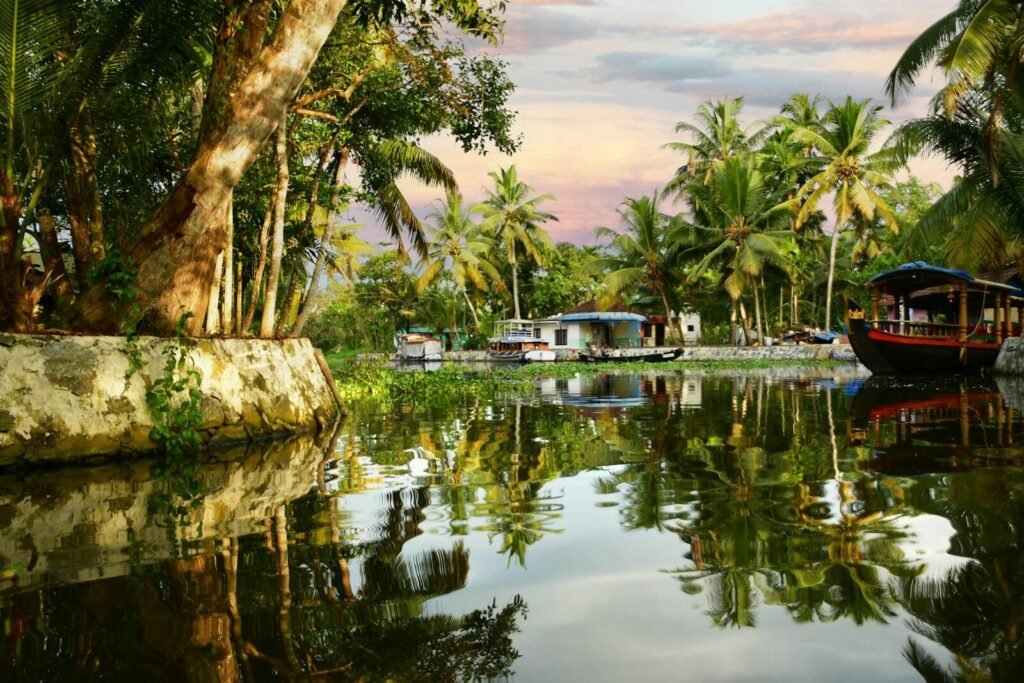
Kovalam is a string of crescent-shaped beaches framed by coconut groves and rocky promontories. The area commonly referred to as Kovalam actually contains several contiguous beaches; the best-known are Lighthouse Beach, Hawa (Eve) Beach and Samudra Beach. The town lies roughly 15–20 kilometres from the city of Thiruvananthapuram and the international airport, which has been important for its accessibility to domestic and international visitors.
Long before tourism took root, Kovalam was a coastal village whose economy and daily life revolved around fishing, coconut cultivation and small-scale trade. Local seafaring traditions, artisanal boat-building and fish-landing practices shaped the shoreline community for centuries. The coastal ecology — backwaters, estuaries and groves — supported a subsistence pattern that persisted as the region was governed by the rulers of Travancore.
Kovalam fell within the historical realm of the princely state of Travancore. While the Travancore administration focused on urban centres such as Thiruvananthapuram for political and cultural activity, the coastal villages retained much of their traditional organisation. Seasonal trade along the Malabar and Arabian seaboard linked these villages to wider networks long before modern tourism arrived.
The transition of Kovalam from a modest fishing area to a resort destination occurred gradually through the 20th century and accelerated in the decades after Indian independence (1947). Several overlapping forces drove this change: improved transport links, the expansion of Thiruvananthapuram as an administrative and cultural hub, and the growing interest of both domestic and foreign visitors in coastal leisure.
In the mid-20th century the coastline began to attract elite visitors and holiday-makers from nearby urban centres. Local entrepreneurs and later regional planners invested in basic amenities, modest guesthouses and road access. The rise of motor travel and the establishment of a nearby airport made short coastal retreats desirable for city residents and for the nascent domestic tourism market.
Kovalam’s international fame rose sharply from the late 1960s into the 1970s, coinciding with the global hippie movement and a surge of Western backpackers seeking inexpensive seaside locales and alternative lifestyles. This era saw:
The informal, bohemian atmosphere transformed Kovalam’s image internationally and helped establish Kerala as a destination for both leisure and holistic health experiences.
From the 1980s onward, Kovalam experienced more structured tourism development. Investment in hotels and resorts increased, Ayurvedic clinics expanded, and local authorities developed tourism-related infrastructure. The area’s proximity to Thiruvananthapuram — with its administrative institutions, rail connections and airport — made Kovalam attractive for both short-stay visitors and longer wellness retreats.
Kovalam became closely identified with Ayurveda, traditional Kerala massage and yoga. Established Ayurvedic centers and small wellness retreats marketed therapeutic packages that appealed to both Indian and international tourists, strengthening a niche market that persists today.
Tourism offerings broadened to include:
The growth of tourism brought substantial economic benefits to Kovalam and the surrounding region: job creation in hotels, restaurants and allied services; new income streams for fisherfolk through boat services and fish sales to hotels; and opportunities for local artisans and entrepreneurs. Tourism revenues have also contributed to local infrastructure improvements.
Increased contact with national and international visitors fostered cultural exchange. While tourism has helped preserve and popularize cultural forms such as Kathakali and classical music, it has also introduced new social dynamics, consumer habits and land-use patterns that have reshaped traditional livelihoods.
Rapid and sometimes unplanned tourism growth has created environmental concerns in Kovalam, common to many coastal destinations:
These challenges have prompted periodic planning interventions, coastal regulation measures and community-based efforts to balance development with conservation.
In recent decades there has been growing emphasis on sustainable tourism in Kerala and Kovalam specifically. Initiatives include beach-cleaning drives, promotion of eco-friendly accommodation, restrictions on certain kinds of coastal construction, and efforts to integrate local communities into tourism planning so that benefits are shared and cultural integrity is preserved.
Effective tourism management in Kovalam involves municipal authorities, state tourism departments, local businesses and community organizations. Stakeholder engagement has increasingly been recognised as essential to ensure that development respects both environmental limits and local livelihoods. Programs combining skill development for hospitality workers, promotion of responsible tourism practices among visitors, and incentives for green infrastructure have been part of this evolving governance approach.
Kovalam today offers a layered experience that reflects its history:
Travelers often combine Kovalam with other Kerala destinations (backwaters, hill stations, cultural centres). Seasonal considerations — monsoon rains versus dry season — shape the best times to visit for beach activities and Ayurveda treatments.
Kovalam’s future as a tourism destination will depend on balancing economic opportunities with environmental stewardship and cultural sensitivity. Key priorities for sustainable growth include:
With careful planning and inclusive governance, Kovalam can retain the qualities that first made it attractive — natural beauty, a relaxed coastal ambiance, and a tradition of wellness — while adapting to contemporary environmental and social needs.
The history of Kovalam Beach in the context of tourism is a story of transformation: from a quiet fishing coastline to an internationally recognized beach and wellness destination. Over the 20th and 21st centuries, changing transport, global cultural movements and the growth of wellness tourism reshaped the local economy and landscape. Today the challenge is to manage that legacy sustainably so that Kovalam remains both a place of livelihood for local communities and a restorative destination for visitors.
What makes us different from other tour package companies
Our travel experts have core and intense knowledge about Kerala sector with over 10 years of experience that will help you choose the best possible itinerary as per your requirements.
Our travel experts are just one call away during your tour to help you with any kind of immediate assistance so that your tour is a more enjoyable and hassle-free tour.
eTourismKerala ensures best rates to all our esteemed guests since we have our own hotels and fleet of vehicles and drivers and there is no third-party involvement. This ensures personalized service and best rates.




















Kindly enter the details below for your Kerala Tour Package