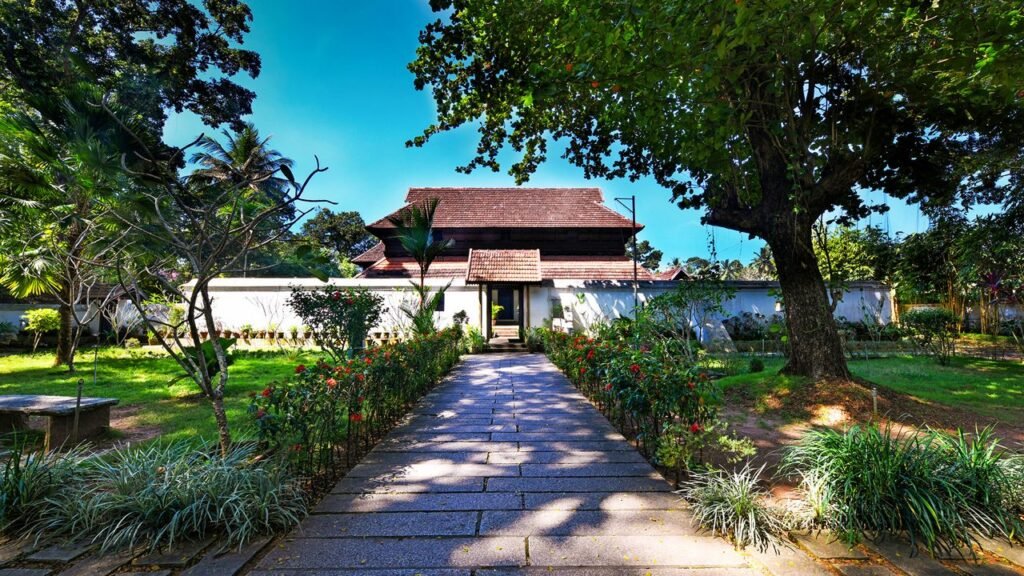
Krishnapuram Palace (locally known as Krishnapuram Kottaram) is one of the most evocative examples of traditional Kerala architecture and courtly culture preserved in the Alappuzha (Alleppey) region. Nestled in the village of Krishnapuram, near Kayamkulam, the palace forms an essential stop for travelers exploring the historical and cultural landscape of Kerala’s coastal districts. This article traces the palace’s history, architecture, collections and its role today in tourism and cultural preservation.
Origins and dynastic context. The palace is attributed to the rulers of the erstwhile Odanad kingdom (also called Kayamkulam), a small principal kingdom that exercised power over parts of present-day Alappuzha and Kollam districts. Historical sources place the palace’s construction in the late medieval to early modern period, with much of its present form dating to the 18th century. The Kayamkulam principality was later absorbed into the Travancore kingdom during the territorial expansion of Marthanda Varma in the mid-18th century.
Function and decline. Krishnapuram Palace served as a royal residence and administrative center for local rulers. Over time, as political power consolidated under Travancore and colonial influences spread across Kerala, the palace’s political role diminished. However, its architectural and artistic heritage remained, eventually becoming the focus of conservation and museological efforts in the 20th century.
The palace is a fine example of traditional Kerala architecture, showing the regional emphasis on climate-responsive design:
While fundamentally Kerala in conception, the palace also reflects contact with other architectural idioms. Materials such as laterite, timber and clay tiles dominate the structure, and the layout emphasizes both public and private courtly functions—audience halls, living quarters and service spaces—arranged to accommodate a temperate, humid tropical climate.
One of the palace’s most celebrated features is its mural painting of “Gajendra Moksha”, a theme drawn from the Bhagavata Purana that depicts the divine rescue of an elephant devotee by Lord Vishnu. This mural is widely regarded as one of the finest surviving examples of Kerala mural art in situ. Its scale, colour palette (natural pigments and earth tones) and narrative clarity offer a rare window into late medieval temple and court painting traditions.
The palace now houses a museum that displays a diverse array of antiquities and daily-use objects from the region and the princely past:
Recognizing the palace’s cultural significance, state archaeological and cultural bodies have taken steps to conserve the structure and manage its collections as a museum. Conservation efforts focus on structural stability, protection of mural surfaces, and the curatorial display of artifacts. Preservation seeks to balance public access—important for tourism and local pride—with the careful conservation required for fragile materials like murals and wooden elements.
The palace appeals to several visitor interests:
A visit to Krishnapuram Palace is usually a half-day excursion from Alappuzha or Kayamkulam. Visitors explore the main halls, view the mural and museum galleries, and walk the palace grounds. Informational panels and local guides often explain the iconography of the murals and the provenance of key artifacts.
The preferred season for travel in Kerala is the cool, dry period from October to March when humidity is reduced and outdoor touring is more pleasant. The monsoon months (June–September) offer a different aesthetic but can make travel and outdoor exploration more challenging.
Krishnapuram Palace stands as an important repository of regional identity. The mural traditions and the material culture displayed in the palace museum connect contemporary Kerala to its courtly past and to broader South Indian religious and artistic traditions. For tourism, the palace represents a form of heritage tourism that combines learning, visual delight and a tangible link to the historical communities of the Alappuzha coast.
For visitors to Kerala interested in history, art and architecture, Krishnapuram Palace is a rewarding and compact cultural stop. It demonstrates the elegance of Kerala’s vernacular architecture, preserves rare mural painting, and offers an accessible entry point into the layered history of small princely states along the Malabar coast. When planning a visit, allow time to read interpretive material, respect conservation needs (especially around murals) and consider pairing the palace visit with the region’s waterways, temples and local handicrafts to get a richer sense of place.
For updated visitor information, conservation news and exhibition details, consult local tourism offices, the Kerala Department of Archaeology or regional museum listings. Local guides, cultural centres and university publications may also offer specialized studies on the palace’s murals and material culture.
What makes us different from other tour package companies
Our travel experts have core and intense knowledge about Kerala sector with over 10 years of experience that will help you choose the best possible itinerary as per your requirements.
Our travel experts are just one call away during your tour to help you with any kind of immediate assistance so that your tour is a more enjoyable and hassle-free tour.
eTourismKerala ensures best rates to all our esteemed guests since we have our own hotels and fleet of vehicles and drivers and there is no third-party involvement. This ensures personalized service and best rates.























Kindly enter the details below for your Kerala Tour Package