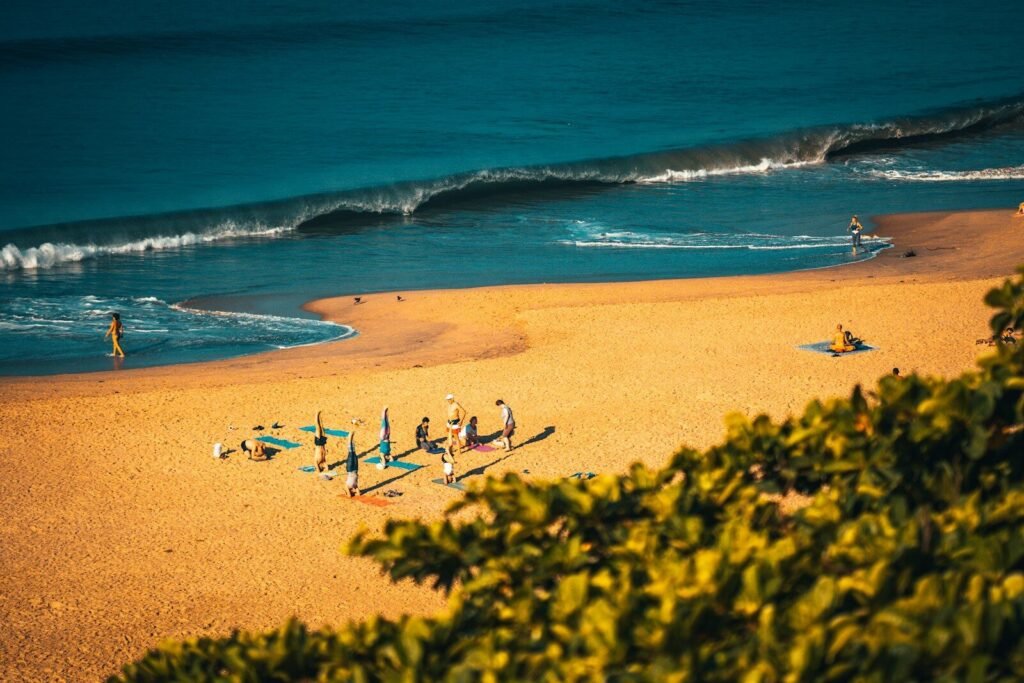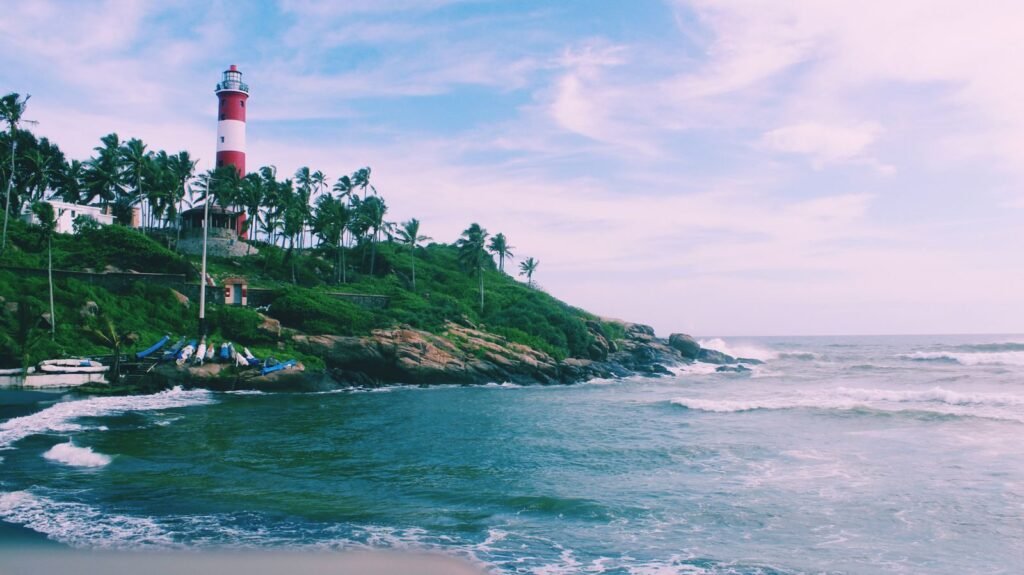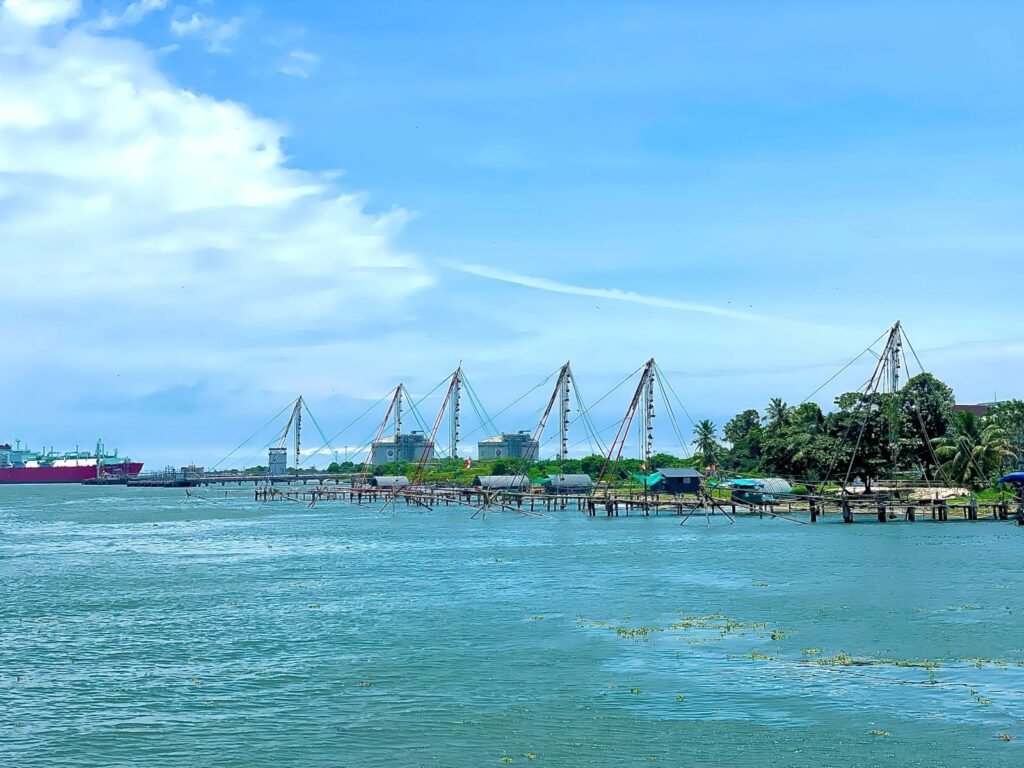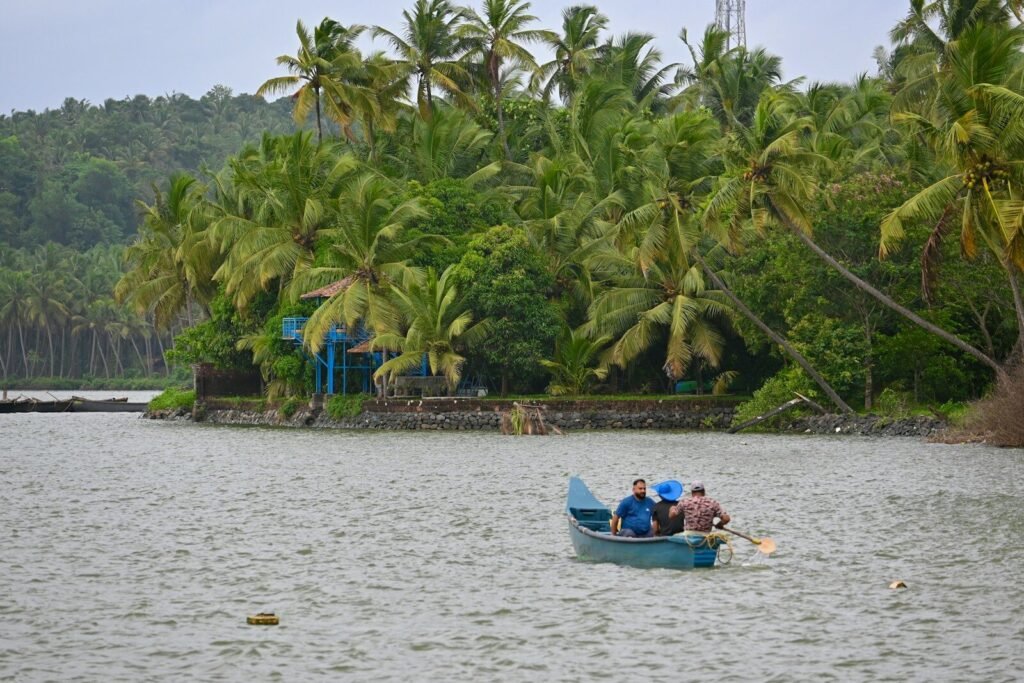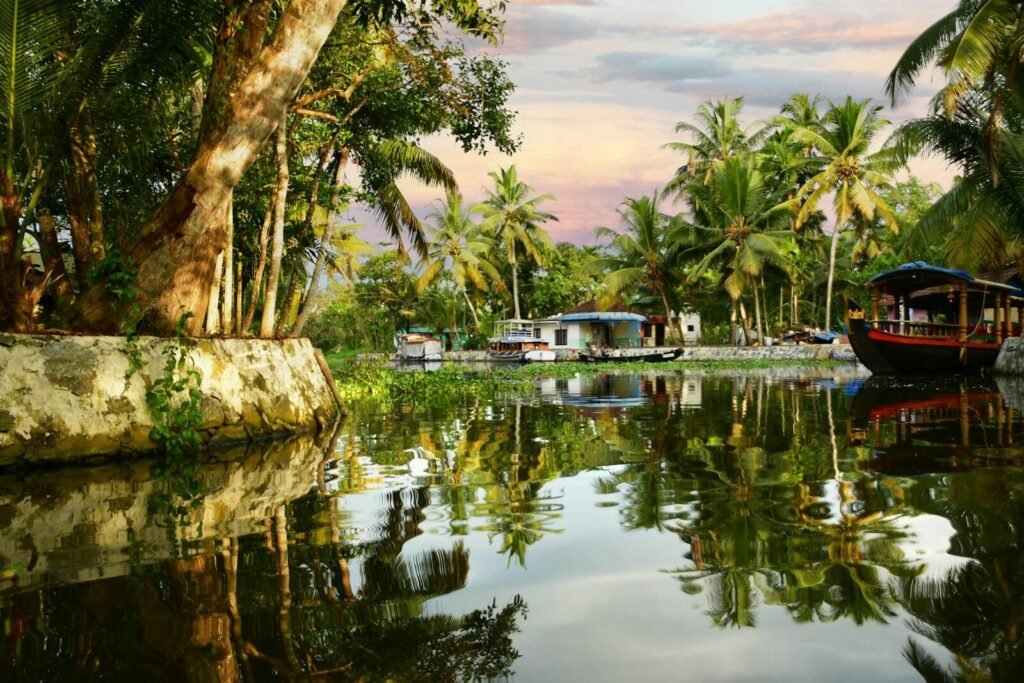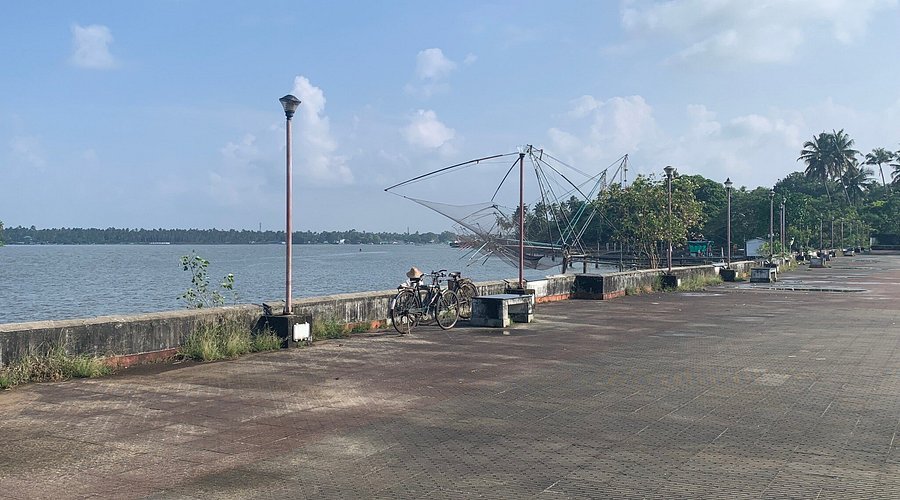
Munambam Beach lies at the northern end of Vypin (Vypeen) island near Cherai, on the western coast of Kerala, India. The beach occupies a geographically significant place where backwaters and the Periyar estuary meet the Arabian Sea. Historically a working shoreline defined by fishing and coir economies, Munambam has in recent decades become both a local leisure destination and an entry point for backwater tourism associated with Cherai and the greater Kochi region.
The modern coastline around Vypin and Munambam reflects centuries of dynamic coastal processes. A major 14th-century flood event widely recorded in Kerala history rearranged the mouth of the Periyar River and contributed to the creation of new shoals and inlets. Over subsequent centuries, tidal action and sedimentation helped form the elongated Vypin island and the sheltered backwaters that characterize the Cherai–Munambam area.
For generations the shoreline supported small fishing hamlets and coconut groves. The favourable mix of lagoon, estuary and open sea created rich fishing grounds and facilitated small-scale trade with nearby Kochi (Cochin), an important port since medieval times.
From the 16th century onward, Kochi’s growing importance as a spice port attracted Portuguese, Dutch and later British interests. Although Munambam and Cherai retained a largely local, agrarian-fishing character, the broader shifts in trade and administration influenced the region’s economy and connectivity—bringing new markets for fish, improved navigation for coasting vessels, and occasional infrastructure changes in the colonial and post‑colonial periods.
Local festivals, temple rituals and seasonal events such as boat races (vallam kali) and Onam have long punctuated the annual calendar. These cultural expressions are tied to both agricultural cycles and fishing seasons and help sustain a strong community identity even as tourism expands.
In the 20th century the Indian state’s focus on fisheries development and the growth of Kochi as an urban centre brought more formal infrastructure to Munambam. A fishing harbour and related facilities were developed to support mechanised boats and larger catches. These facilities changed the scale and organisation of fishing, integrating Munambam more tightly into regional fish markets and introducing new livelihoods and migration patterns.
Historically, Cherai and Munambam were weekend and holiday destinations for people from Kochi. Over the late 20th and early 21st centuries, improvements in road and ferry links, the growth of Kochi’s tourism industry, and a wider interest in Kerala’s beaches and backwaters transformed Munambam from a community shoreline into a recognized tourist node.
Munambam and Cherai are accessible from Kochi by road and by local ferry services that connect the Vypin island chain with the Ernakulam mainland. Improved local roads, guesthouses and homestay options have made multi-day stays convenient for both domestic and international visitors.
The combination of natural coastal dynamics and human activity has produced significant challenges: coastal erosion in places, pressure on fisheries from mechanised fleets, pollution from urban runoff and plastic, and loss of mangrove habitats. Such pressures can undermine both the ecological character of Munambam and the very tourism that depends on a healthy shoreline.
Understanding Munambam’s history enriches the tourist visit: the shoreline bears the traces of long-standing fishing traditions, colonial-era trade patterns centred on Kochi, and the physical legacy of shifts in river mouths and tidal landforms. Interpreting these layers—through local museums, guided harbour walks, and conversations with fishers and community elders—helps visitors see Munambam not merely as a recreational spot but as a living cultural landscape.
Munambam Beach, in the context of Cherai and Vypin island, offers a layered story of coastal formation, traditional livelihoods, and evolving tourism. Its significance is both ecological and cultural: a working shoreline that has adapted across centuries and now faces the dual opportunities and responsibilities of increased visitation. For travellers, Munambam promises more than scenic sunsets — it provides a window into Kerala’s maritime past and present and a reminder that sustainable tourism must balance visitor enjoyment with protection of the natural and human communities that make places like Munambam unique.
What makes us different from other tour package companies
Our travel experts have core and intense knowledge about Kerala sector with over 10 years of experience that will help you choose the best possible itinerary as per your requirements.
Our travel experts are just one call away during your tour to help you with any kind of immediate assistance so that your tour is a more enjoyable and hassle-free tour.
eTourismKerala ensures best rates to all our esteemed guests since we have our own hotels and fleet of vehicles and drivers and there is no third-party involvement. This ensures personalized service and best rates.






















Kindly enter the details below for your Kerala Tour Package