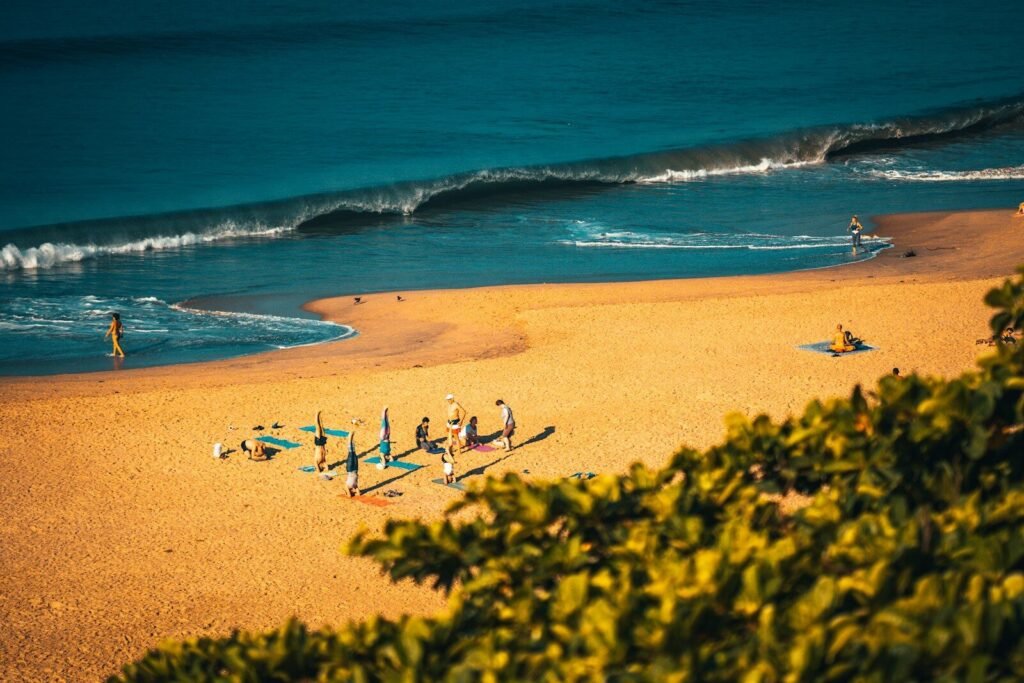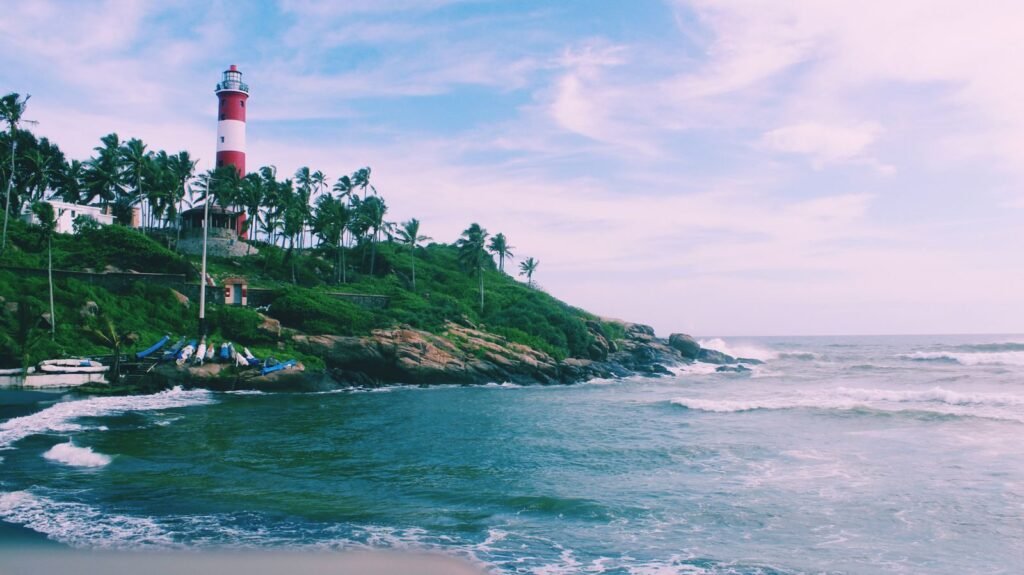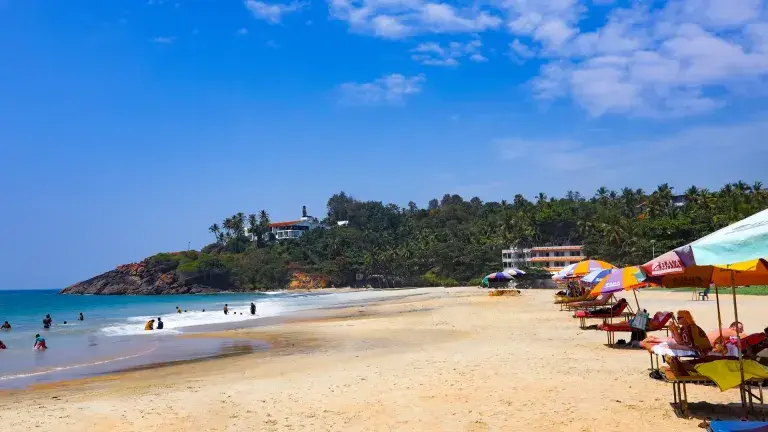
Nestled on the southern coast of India in the district of Thiruvananthapuram, Kerala, Samudra Beach is one of the three crescent-shaped beaches that together form the internationally known seaside resort of Kovalam. Although today it attracts both domestic and international visitors for its relaxed atmosphere and Ayurvedic offerings, Samudra Beach’s transformation from a quiet fishing shoreline into a major tourism node reflects broader historical, cultural and economic shifts along Kerala’s coast.
Samudra Beach lies at the southern end of the Kovalam coastline, bounded by swaying coconut palms, sandy coves and the backwaters that characterize Kerala’s coast. Its name—Samudra meaning “ocean” or “sea” in Sanskrit—evokes the long maritime orientation of the region. The beach is part of a compact coastal cluster that includes Lighthouse (northern) and Hawah/Eden (central) beaches, each with a distinct character and history.
The broader coastline near Kovalam has been part of South India’s maritime networks for millennia. Nearby Vizhinjam — less than 10 km from Kovalam — is known historically as an ancient port involved in trade across the Arabian Sea. While Kovalam itself does not have the archaeological profile of major ports, it shared the coastal economy of fishing, trade and cultural exchange mediated through nearby centers.
For generations, the people of Kovalam and neighboring villages sustained themselves by fishing, toddy tapping, coconut cultivation and small-scale agriculture. Local boat-building, net-weaving and coastal crafts formed the economic backbone. The shoreline and its groves also supported communal and ritual life tied to the sea.
The modern tourist interest in Kovalam began in the first half of the 20th century when European travelers and expatriates visiting the Travancore area noticed the region’s curving bays and tranquil climate. These early visitors appreciated the beaches for bathing, relaxation and the scenic quality rather than large-scale recreation.
From the 1950s through the 1970s, Kovalam slowly developed infrastructure to receive longer-staying guests. Small hotels, private villas and informal beach huts began to appear. During this period, Kerala’s traditional systems of healing—particularly Ayurveda—found a receptive audience among health-minded visitors. Practitioners and entrepreneurs began offering oil massages, herbal treatments and wellness retreats that complemented the beach experience.
Like several beaches across South and Southeast Asia, Kovalam experienced an influx of Western backpackers and the countercultural “hippie” movement during the 1960s and 1970s. These travelers valued affordable, sun-drenched locales where yoga, meditation and alternative health were accessible. The resulting cross-cultural encounter increased Kovalam’s international visibility and contributed to a beach-holiday identity that stretched beyond regional tourism.
Samudra Beach established a reputation as comparatively quieter and more intimate than the busier Lighthouse Beach. The gentle slope, stretches of fine sand and the fringe of palms suited families, couples and guests seeking a less crowded environment. Resorts and small-scale accommodation built along Samudra maintained an emphasis on comfort, wellness and scenic calm.
The types of tourist activity at Samudra Beach have broadened while retaining traditional strengths:
Tourism has diversified local incomes: families operate homestays and eateries, young people find employment in hospitality, and traditional boat-builders and fishers sell fresh catch directly to hotels. Many women have become involved in cottage industries and the wellness sector.
The growth of tourism brought construction pressure on coastal land and a shift away from purely subsistence livelihoods. The commercialization of beach-front property raised local incomes for some while altering social relations and environmental access for others.
Increased visitor numbers, unplanned construction and pressures on coastal ecosystems have led to problems such as beach erosion, habitat disturbance and waste management challenges. The delicate balance between tourism development and shoreline stability has been a recurring concern.
In response, public authorities, local communities and private stakeholders have adopted several measures:
Today Samudra Beach attracts a mixture of holidaymakers: wellness tourists drawn to Ayurveda and yoga; domestic families seeking seaside relaxation; and international visitors combining culture, cuisine and coastal leisure. The nearby city of Thiruvananthapuram provides transport links, while ongoing local investment continues to update facilities.
The future of Samudra Beach as a tourism destination depends on balancing growth with ecological stewardship and cultural integrity. Key opportunities include:
Samudra Beach’s history as a tourism locale is a microcosm of Kerala’s coastal transformation: rooted in traditional fishing communities, opened to global visitors in the mid-20th century, and maturing into a place known for both leisure and wellness. Its trajectory highlights the cultural exchanges, economic changes and environmental tensions that accompany seaside tourism. With thoughtful planning and community participation, Samudra Beach can remain a vibrant and sustainable destination that honors its past while welcoming future visitors.
What makes us different from other tour package companies
Our travel experts have core and intense knowledge about Kerala sector with over 10 years of experience that will help you choose the best possible itinerary as per your requirements.
Our travel experts are just one call away during your tour to help you with any kind of immediate assistance so that your tour is a more enjoyable and hassle-free tour.
eTourismKerala ensures best rates to all our esteemed guests since we have our own hotels and fleet of vehicles and drivers and there is no third-party involvement. This ensures personalized service and best rates.














Kindly enter the details below for your Kerala Tour Package