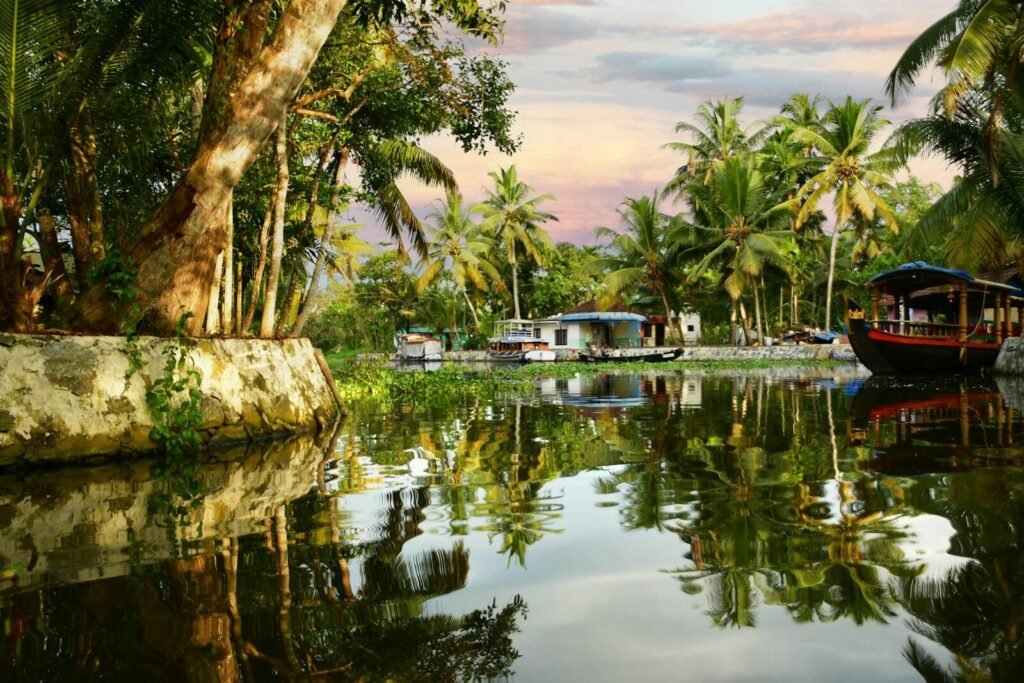
Kovalam, a small coastal town on the Arabian Sea in the south Indian state of Kerala, is today one of the state’s most recognizable beach destinations. Its story — from a quiet fishing hamlet to an international tourist magnet — reflects broader patterns in Kerala’s social, cultural and economic history. This article traces that evolution with attention to the historical milestones that shaped Kovalam’s identity as a tourism centre.
The name “Kovalam” is derived from the Malayalam word for a coconut grove or grove of “kovalam” trees, reflecting the landscape that historically framed the shoreline. For centuries the area was a cluster of fishing villages and coconut groves closely linked to the nearby port-city of Thiruvananthapuram (formerly Trivandrum).
The coastal economy was traditionally based on fishing, coconut cultivation and small-scale trade. Local life revolved around the rhythms of the sea and seasonal monsoons, and the beaches were primarily local gathering places rather than destinations.
Administratively the region fell within the kingdom of Travancore, a prosperous princely state with its capital at Thiruvananthapuram. While the nearby ports (such as Vizhinjam and Colachel) saw contact with traders from the Arab world and later Europeans, Kovalam itself remained a relatively quiet coastal stretch, valued for its natural beauty but not for large-scale maritime commerce.
Fishing practices and boat craft unique to the Malabar coast shaped everyday life.
Traditional Kerala architecture — thatched homes, temples and small shrines — dotted the landscape.
Maritime folk traditions, coastal cuisine and seasonal festivals were important anchors of identity.
In the first half of the 20th century, Kerala’s scenic backwaters and beaches began to attract visitors from the region’s elites and occasional foreign travellers. Kovalam’s palm-fringed beaches and mild climate made it an appealing retreat for residents of Thiruvananthapuram.
Small beach bungalows and informal guesthouses began to appear, often run by local families. These early accommodations welcomed a modest number of domestic visitors and well-travelled foreigners seeking a quiet coastal experience.
After Indian independence, the expansion of air travel, rising international travel interest in Asia, and the growing popularity of alternative lifestyles catalysed a transformation in Kovalam’s tourism profile.
International back-to-the-land and “hippie” movements of the late 1960s and 1970s brought long-term foreign visitors to Kovalam. Attracted by the palm-fringed beaches, inexpensive living, and a relaxed atmosphere, many foreign travellers chose Kovalam as a stop on the overland and sea routes across South Asia.
Ayurveda — the traditional system of Indian medicine native to Kerala — began to be marketed to foreigners as a healing and rejuvenating experience. Simple ayurvedic treatments, massage and naturopathy became key attractions and remain central to Kovalam’s tourism identity.
By the late 1970s and early 1980s, international word-of-mouth, guidebooks and travel writing had established Kovalam as a must-visit beach destination in South India.
Recognising Kovalam’s growing importance, successive Kerala state administrations and the Kerala Tourism Development Corporation (KTDC) invested in infrastructure, accommodation and publicity.
Hotels and resorts of different categories expanded along the coastline, from budget guesthouses to upscale properties.
Road connections to Thiruvananthapuram and the nearby international airport improved accessibility for domestic and foreign tourists.
Cultural festivals, handicraft markets and organised tours were promoted to lengthen the tourist season beyond the typical beach months.
Kovalam was increasingly marketed as the face of Kerala beach tourism — a place where Ayurvedic wellness, traditional culture and beach leisure combined. This branding helped attract both short-stay beach-goers and longer-stay wellness tourists.
Kovalam’s present-day offerings are shaped by layers of local history, colonial influences and modern tourism development. Some features to note:
The Three Beaches: Kovalam is commonly described in terms of three contiguous beaches — Lighthouse Beach, Hawah (or Hawah/“Eve’s”) Beach, and Samudra Beach — each with its own character. Over time these distinct stretches have been shaped by both natural processes and human use.
Lighthouse: A prominent landmark and functional navigational aid, the lighthouse also became a tourist vantage point. Lighthouses along the coast transformed from purely maritime infrastructure to symbols of seaside identity.
Ayurvedic Centres and Spas: The spread of small clinics, treatment centres and educational institutes reflected a revival and commercialization of traditional medicine aimed at an international clientele.
Local Markets and Cultural Shows: As tourism matured, local crafts, dance performances (such as Kathakali and Mohiniyattam) and cuisine were packaged for visitors, creating new livelihoods and avenues for cultural exchange.
The rise of tourism in Kovalam brought profound social and economic changes.
Economic Diversification: Many local families shifted from purely fishing or agriculture to hospitality, retail and services connected to tourism.
Employment: Tourism created jobs across skill levels — from informal vendors and masseurs to trained hotel staff and tour operators.
Cultural Exchange: The long-term presence of international visitors fostered cross-cultural encounters — language skills, culinary fusion and new social norms.
Challenges: Increased competition for coastal land, seasonal employment, and cultural commodification were among the tensions that accompanied growth.
Rapid development brought environmental pressures: coastal erosion, waste management issues, stress on water resources, and loss of traditional fishing access in some stretches. In response, local authorities, NGOs and some tourism businesses have experimented with conservation measures, sustainable tourism practices and community-based initiatives.
Today Kovalam is a blend of its layered past and evolving present. It attracts:
Beach tourists seeking sun, sand and sea.
Wellness travellers pursuing Ayurvedic treatments, yoga and meditation.
Domestic tourists from across India drawn to Kerala’s reputation for scenic beauty and hospitality.
Families, honeymooners and short-stay leisure travellers using Kovalam as a gateway to Kerala’s broader attractions.
Local culture continues to be a draw: culinary offerings, temple festivals, classical dance and handicrafts remain important complements to the beach experience.
Pre-20th century: Fishing hamlet and coconut groves; local coastal economy.
Early 20th century: Occasional elite retreats and modest guesthouses; growing awareness of the coast’s scenic value.
1960s–1970s: Arrival of international travellers and hippie culture; emergence of Ayurveda tourism.
1980s–2000s: Government promotion, infrastructure build-out, expansion of hotel/resort sector.
2000s–present: Mature tourism market, focus on diverse visitor segments; rising emphasis on sustainability and community benefits.
Looking forward, actors in Kovalam — from local communities and hoteliers to government bodies — face the task of balancing economic benefits with environmental stewardship and cultural integrity. Important strategies include:
Community-led tourism enterprises that return more value to local residents.
Coastal zone management to reduce erosion, manage waste and protect marine habitats.
Promotion of off-season attractions and cultural experiences to spread economic benefits across the year.
Training and upskilling local workers in hospitality, guiding and sustainable practices.
Kovalam’s history as a tourist destination is a microcosm of Kerala’s broader tourism story: a movement from local coastal livelihoods to a globalized visitor economy shaped by natural beauty, traditional knowledge (notably Ayurveda), and sustained promotion. The challenge for the future is to retain the qualities that made Kovalam attractive — its beaches, culture and hospitality — while ensuring that tourism development is environmentally sustainable and socially inclusive. When managed thoughtfully, Kovalam can remain a living example of how history and tourism interweave to create resilient coastal communities.
What makes us different from other tour package companies
Our travel experts have core and intense knowledge about Kerala sector with over 10 years of experience that will help you choose the best possible itinerary as per your requirements.
Our travel experts are just one call away during your tour to help you with any kind of immediate assistance so that your tour is a more enjoyable and hassle-free tour.
eTourismKerala ensures best rates to all our esteemed guests since we have our own hotels and fleet of vehicles and drivers and there is no third-party involvement. This ensures personalized service and best rates.















Kindly enter the details below for your Kerala Tour Package