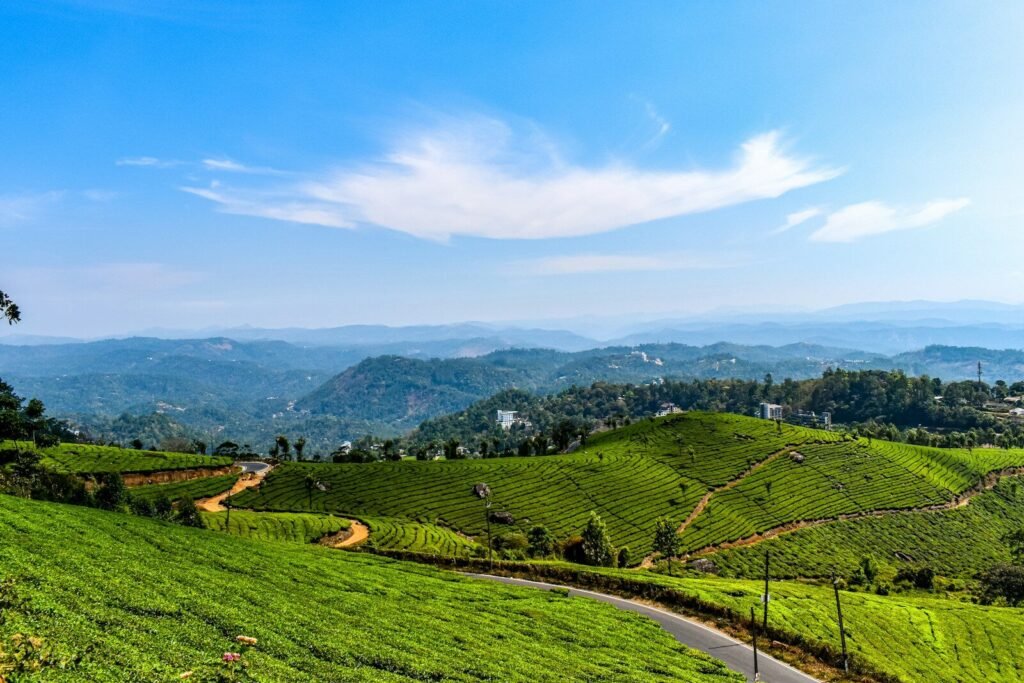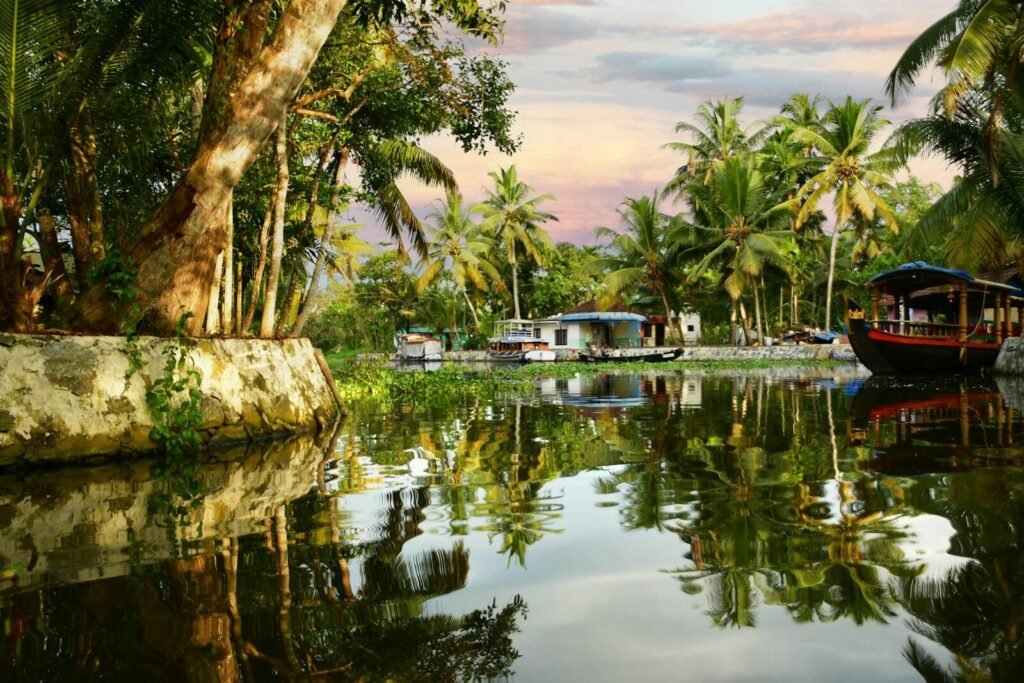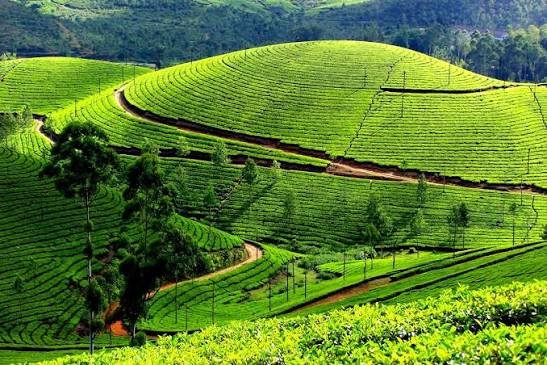
Nestled in the Western Ghats of Kerala, Munnar is synonymous with rolling emerald terraces of tea that sweep across steep hillsides. The tea gardens are not only an agricultural landscape but also a cultural and historical palimpsest: they tell stories of colonial enterprise, labour migrations, industrial change, and the rise of tourism. This article traces the history of Munnar’s tea gardens and examines how that history has shaped the town’s identity as a leading hill-station destination.
The very name “Munnar” reflects the landscape — it derives from words that signify the meeting of three rivers. The high-altitude plateau, cool climate, abundant rainfall and acidic soils of the Kanan Devan Hills created ideal conditions for plantation agriculture. Long before commercial crops arrived, the region sustained local communities and biodiverse montane forests.
Prior to large-scale plantation development, the area comprised forested slopes and small-scale shifting cultivation by local and tribal communities. These ecosystems provided livelihoods through foraging, subsistence agriculture and seasonal grazing, and supported rich biodiversity typical of the Western Ghats.
In the late 19th century the hilly tracts around Munnar were surveyed and converted into commercial plantations by British planters and colonial administrations. While different cash crops were trialed initially, tea emerged as the dominant plantation crop because of the region’s altitude and climatic suitability. Large contiguous estates were carved out of forests and terraced into the familiar tea-swept slopes seen today.
The plantation model introduced a new socio-economic order: estates with bungalows for managers, workers’ lines (rows of labour quarters), tea factories for processing, and estate roads. Mechanisms for plucking, withering, rolling and firing were centralized at factories, and graded teas were marketed through colonial trade networks.
The expansion of tea required organized labour. Large numbers of workers were brought into the high ranges from neighboring regions, especially Tamil-speaking areas to the east and south. Over generations these labour communities developed distinct plantation cultures with their own social institutions, languages and customs, while also contributing to the demographic character of modern Munnar.
After Indian independence, ownership and management of many estates changed hands. Indian companies and cooperative entities acquired significant acreage, and brands associated with the region — some corporate, some local — emerged. At the same time, the estates continued to be important sources of regional employment and economic activity.
Through the 20th century planters adopted improved cultivars, mechanized certain processes and optimized productivity. Tea factories modernized to improve consistency and meet market demands for quality. These changes also influenced the visual and operational character of the gardens, while sometimes intensifying ecological pressures.
The striking aesthetic of terraced tea, cool climate and panoramic mountain views made Munnar attractive to visitors as early as the colonial period, when hill stations served as refuges from tropical humidity. In the late 20th and early 21st centuries, tourism around the tea gardens expanded dramatically, driven by improved road access, growing domestic travel and international interest in “tea country” experiences.
Tea tourism often dovetails with visits to Eravikulam National Park, the Anamudi peak, Mattupetty Dam and viewpoints that frame the tea-clad hills. The interplay of conservation areas and cultivated landscapes is a defining feature of the Munnar visitor experience.
Unlike botanical gardens or staged attractions, Munnar’s tea gardens are living cultural landscapes. The daily life of workers, festivals, local cuisine, and estate community institutions contribute to a social dimension that tourists encounter. Responsible tourism practices emphasize respectful engagement with estate communities and sensitivity to their livelihoods.
Converting natural forests to mono-crop plantations altered habitats and hydrology in the high ranges. Soil erosion on steep slopes, pressure on water systems, and reduced biodiversity are ongoing concerns. Climate variability — changing rainfall patterns and rising temperatures — also poses risks to both yields and the ecological balance of the Western Ghats.
Estate managers, NGOs, certification bodies and government agencies have promoted sustainable practices such as organic cultivation, soil conservation, riparian buffer restoration, integrated pest management and biodiversity corridors. For tourism, eco-friendly accommodation, community-based tours and interpretive programs aim to reduce visitor impact while offering educational value.
Tourism diversifies estate incomes beyond tea sale and provides employment in guiding, hospitality and retail. Experiences like tea tasting, workshops, and cultural tours generate added revenue streams and keep heritage structures in use.
Sustainable tourism in tea landscapes requires balancing visitor demand with worker privacy, fair compensation, community consent, and ecological stewardship. Policies that prioritize local participation and reinvestment of tourism revenues can help align tourism growth with social equity.
The tea gardens of Munnar are more than a postcard landscape: they are historical artifacts and living systems shaped by colonial enterprise, labour, agricultural science and evolving markets. Today they form a central pillar of Munnar’s tourism identity — drawing travelers for their beauty, heritage and the sensory experience of tea itself. The future of tea tourism here depends on maintaining ecological health, honoring the lives of estate communities, and designing visitor experiences that deepen understanding rather than simply consume a view.
Visitors seeking deeper engagement should plan estate visits that include factory tours, museum visits where available, and conversations with local guides or community organizations to gain first-hand perspectives on the people and practices that sustain Munnar’s tea heritage.
What makes us different from other tour package companies
Our travel experts have core and intense knowledge about Kerala sector with over 10 years of experience that will help you choose the best possible itinerary as per your requirements.
Our travel experts are just one call away during your tour to help you with any kind of immediate assistance so that your tour is a more enjoyable and hassle-free tour.
eTourismKerala ensures best rates to all our esteemed guests since we have our own hotels and fleet of vehicles and drivers and there is no third-party involvement. This ensures personalized service and best rates.






















Kindly enter the details below for your Kerala Tour Package